Inspiration for the Painting: "A Mother's Embrace"
My idea for this painting emerged from the profound love and devotion I witness every day in my own home. I wanted to capture the essence of what it means when people say, "Mother is the name for God in the lips and hearts of little children." The painting shows a mother hugging her two children, a boy and a girl, in a close embrace that radiates deep, unconditional love.
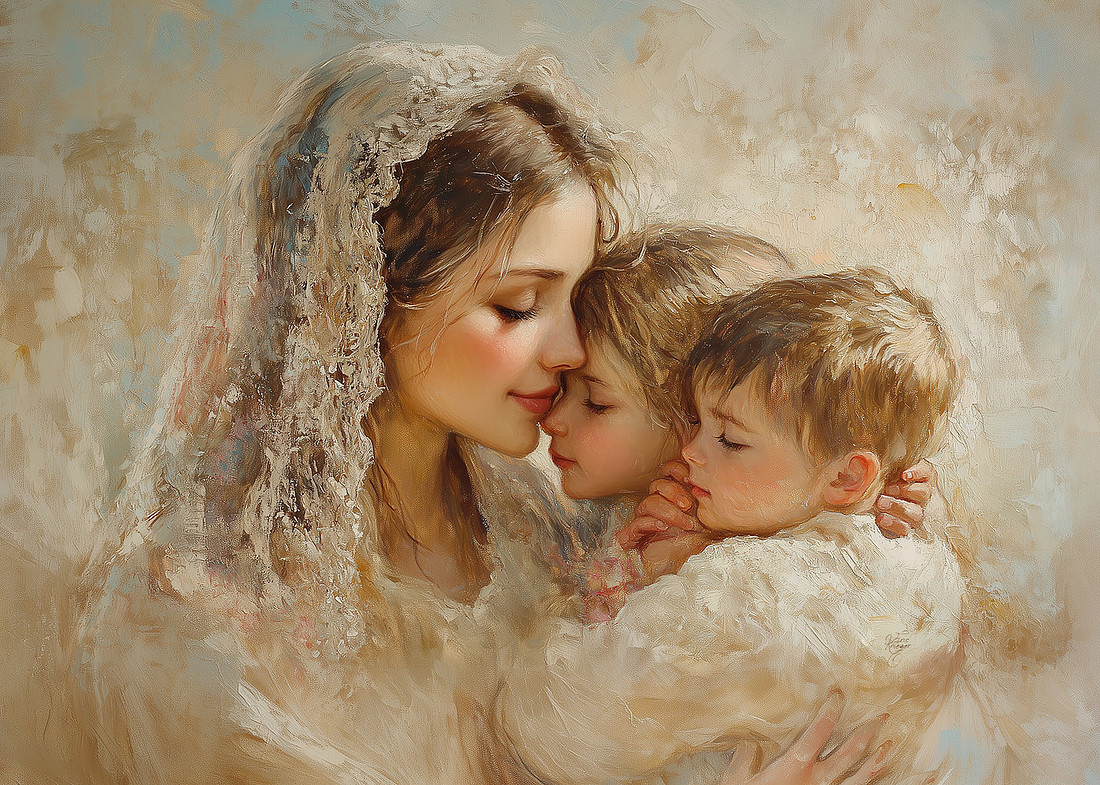

My beloved wife has been the cornerstone of our family, her love for our children shining through in every moment she spends with them. Her presence is like a guiding light, always there to comfort, nurture, and support. Watching her with our children, I am reminded of the sacred bond between a mother and her child—a bond that forms the very foundation of their world.
But the inspiration for this painting is also deeply rooted in my own experiences as a child. Though I have not seen my mother in a long time, the memories of her remain vivid and cherished. When I think back to my childhood, I remember her as the center of my universe, the person around whom my entire life revolved. Her love was a constant, a source of comfort and strength that I hold deep in my heart, even now.
The loss of contact with my mother has been a source of pain, but it has also deepened my appreciation for the role of a mother in a child's life. I am a witness every day to the irreplaceable bond between a mother and her children, seeing it reflected in the way my wife cares for ours. As I bring this image to life, I hope to convey the idea that a mother’s love is more than just a feeling; it is the very essence of life for a child. It is a force that shapes their world, giving them a sense of security, belonging, and unconditional love. A mother’s embrace is not just a physical act but a symbolic one—representing the divine, life-giving force that mothers are to their children. It is a celebration of their love, their sacrifices, and the irreplaceable role they play in shaping the hearts and souls of their children.
Shall I compare thee to a summer’s day?
Shall I compare thee to a summer’s day? (Sonnet 18)
William Shakespeare (1564 – 1616)
Shall I compare thee to a summer’s day?
Thou art more lovely and more temperate.
Rough winds do shake the darling buds of May,
And summer’s lease hath all too short a date.
Sometime too hot the eye of heaven shines,
And often is his gold complexion dimmed;
And every fair from fair sometime declines,
By chance, or nature’s changing course, untrimmed;
But thy eternal summer shall not fade,
Nor lose possession of that fair thou ow’st,
Nor shall death brag thou wand’rest in his shade,
When in eternal lines to Time thou grow’st.
So long as men can breathe, or eyes can see,
So long lives this, and this gives life to thee.

A Carpathian Connection
In the verdant heartland of Romania, where the Carpathian Mountains cast their ancient shadow, I met Mihaela when traveling before the pandemic. It was during a journey filled with the discovery of hidden gems and the warmth of newfound friendships. Mihaela was a character as captivating as the land itself, with a story that intertwined sorrow and joy in equal measure.
The first thing I noticed about Mihaela was Bella, her strikingly beautiful dog. Bella had a coat that shimmered like burnished copper in the sunlight, and eyes that held depths of intelligence and loyalty. As Mihaela shared their story, Bella lay by her feet, a silent testament to a bond forged in the crucible of adversity.

Bella came into Mihaela's life on a day shadowed by tragedy. Driving through a rural road, she witnessed a heart-rending scene: a truck had inadvertently struck a stray dog and its small family, leaving behind a scene of loss and despair. Amidst the chaos, Mihaela's eyes fell upon the sole surviving puppy.
Acting on an impulse of compassion, Mihaela rescued the puppy, bringing it into her home and her heart. She named her Bella, and with meticulous care, she nursed the fragile creature back to health from its difficult and unforgiving life. Through sleepless nights and tireless days, Mihaela became more than a savior to Bella; she became her whole world.
As Bella grew, so too did the depth of their connection. Mihaela told me how Bella had become her guardian, her protector, and her most faithful companion. Their daily walks through the Romanian countryside were not just exercises but journeys of mutual understanding and silent conversations.
Their story was not just about rescue but about mutual salvation. Bella gave Mihaela a sense of purpose and companionship, filling her life with joy. In return, Mihaela provided Bella with a love that was boundless and pure. Together, they were a symbol of resilience and hope, a reminder that even in moments of profound sorrow, there can be salvation. They reminded me at the beginning of this New Year that even in the most unexpected places, we can find stories that touch our hearts and leave an indelible mark on our souls.

Shadows of Desolation: The Silent Echoes of Forgotten Humanity
In the dim light of a forsaken city street, a solitary man crouches - a silhouette of despair amidst concrete and shadows. The street, once a vibrant tapestry of life's melodies, echoes only the whispers of lost souls, now a broken tableau of despair. The cold, unfeeling concrete beneath him reflects the chill in his heart, a heart burdened by the weight of a suffering that is timeless, as ancient as humanity itself. Each building, towering yet hollow, stands as a monument to forgotten days, their windows like vacant eyes, witnesses to a silent tragedy that is paved below them.

Around him, other figures of men, women, and children huddle, each a mirror of his desolation. They are like specters in the twilight, their forms blurred and indistinct, united in their shared helplessness. The air is heavy with their unspoken sorrows, a collective burden that hangs over the street like a shroud that falls unto already blinded eyes. They are the unseen, the unheard, their presence a stark reminder of a world indifferent to their plight. Their faces, etched with the wear of neglected dreams, tell tales of a suffering born from humanity's insatiable greed for power and revenge.
The man's posture is a physical manifestation of defeat, his body folded into itself as if to disappear from the cruel world that surrounds him. His eyes, hidden in the shadow of his downturned head, hold stories untold, dreams unfulfilled. There's a palpable weight to his presence, as if he bears not just his despair, but the silent cries of those around him. In his crouching posture, he becomes an emblem of all humanity caught in the throes of an endless struggle. His eyes, hollow and unseeing, gaze into a void where hope once flickered. The very air around him is heavy with the weight of unshed tears and unspoken pleas, a suffocating blanket of this collective despair.
The suffering felt in the silent communion of lost souls speaks of a deeper ailment - a world sickened by its hunger for dominion, and the cacophony of the power-hungry drowns out the truth. Their forsaken pain becomes a silent scream against the deafening indifference of the ages. It tells a story not just of the man, but of humanity itself – of the moments when the weight of the world brings us to our knees.
This scene becomes a poignant elegy to the invisible casualties of human avarice captured in the stillness of the shattered street. It serves as a somber reflection of the price paid in the name of power and vengeance – a price exacted from the souls languishing in the shadow of grandiose ambitions. In their shared helplessness, these figures stand as silent victims, bearing witness to an uncomfortable truth: in the relentless pursuit of domination and retribution, it is the essence of our shared humanity that weeps, unseen, forgotten in the desolate streets.
A Life Interrupted: The Story of Samuel
Samuel's life is a poignant reminder of how quickly fate can turn. Born and raised in a small town in North Carolina, Samuel was known for his kind heart and strong faith. Raised in a devout Christian family, he carried those principles into adulthood, always guided by compassion and a deep sense of justice.
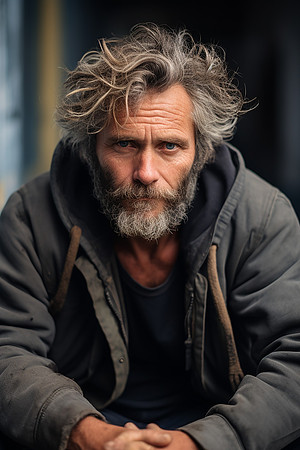
Samuel's life took a decisive turn when he joined the military, driven by a desire to serve his country and make a difference in the world. He was deployed overseas, where he faced the harsh realities of war. Despite the chaos and danger, Samuel's faith never wavered. He became known among his peers for his unshakeable spirit and his willingness to help others, even in the most dire situations.
His bravery was put to the test during a fierce battle where amidst heavy fire, one of his close friends was severely wounded. Without hesitation, Samuel risked his own life to save his comrade, an act of heroism that earned him a Purple Heart. But for Samuel, it wasn’t about the recognition; it was about doing what was right, about living his faith through his actions.
After his military service, Samuel returned home, carrying the invisible scars of war, but hopeful for a new chapter in his life. He married his high school sweetheart, and they had a son, building a modest but happy life together. On one life-altering autumn evening, tragedy struck in an instant when a drunk driver collided with his car. The accident took the lives of his wife and son, leaving Samuel alone and broken.
This loss was a turning point for Samuel. Plunged into deep grief, he found himself unable to cope with the enormity of his loss. He drifted away from family and friends, lost his job, and eventually found himself without a home. The world seemed to have forgotten the hero he once was, and he, too, began to lose sight of his own worth.
Samuel's days were spent wandering the streets, his nights in whatever shelter he could find. Yet, even in the depths of despair, his faith remained a constant. He often found solace in small acts of kindness — sharing what little he had with others who were struggling, offering words of comfort and hope.
Samuel's story is a stark reminder of the fragility of life and the impact of a single moment. It’s also a testament to the enduring strength of the human spirit and the capacity for resilience in the face of unimaginable loss. His journey from a war hero to a forgotten man on the streets reveals the harsh realities faced by many veterans and the importance of compassion and support for those who have sacrificed so much.
In Samuel, we see not just a man who lost everything, but also a beacon of hope and faith, a reminder that even in our darkest hours, our spirit and our principles can shine through. His life, marked by both heroism and tragedy, challenges us to remember the forgotten and to recognize the enduring dignity and worth in every human being.