The Lady's Rocks of the Carpathians

Traveling to new places in different countries is not just an opportunity to escape from daily workload and exercise your body and mind. It opens your eyes and develops your knowledge of customs and traditions you may never otherwise experience in person, if not outside of the World Showcase in Epcot Disney World. Epcot may be ideal for young children to travel the world in a single day walking tour, but it cannot substitute for an epic immersion away from home in a different country. Having a passport and using it singularly fosters personal growth in understanding the diversity of world cultures. Moreover, traveling allows you to experience world history you may have only studied in books, to meet people who speak other languages, to make new friends and enjoy authentic cuisine, and positively shift your social paradigm.
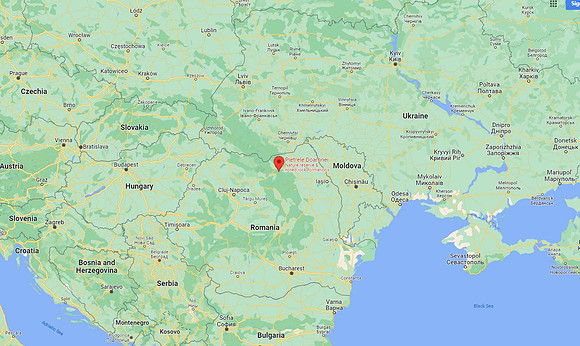
In Romania, Bukovina is located on the northern slopes of the central Eastern Carpathian Mountains and the adjoining plains. The region is divided between Romania and Ukraine and is often called the "Switzerland of the East," well known in Europe for its beautiful forested and mountainous landscapes.
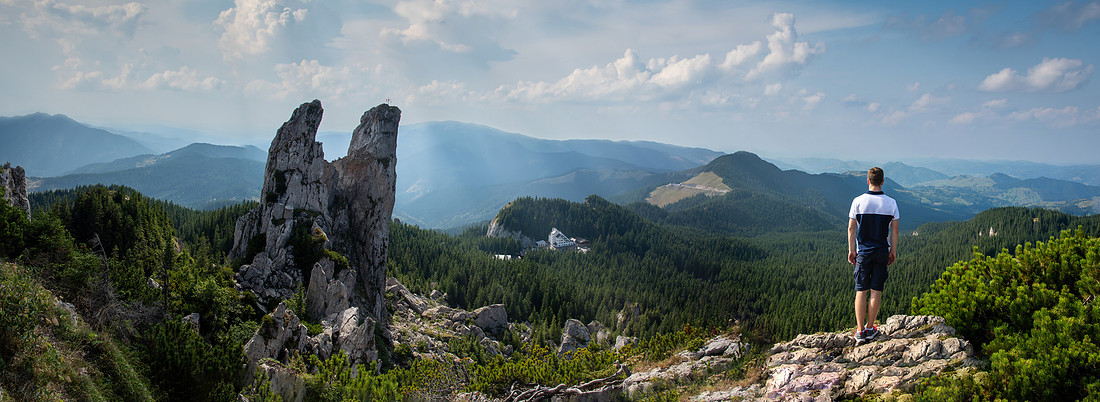
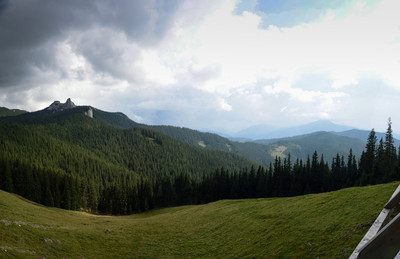
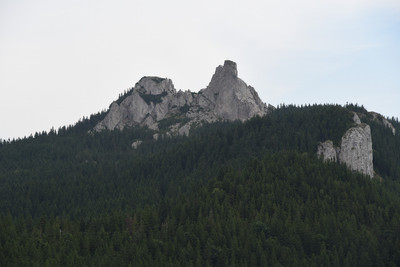
The Rarău massif dominates in northern Romania (Suceava County), in the historical region of Bukovina. It lies between the valleys of the Moldova and Bistrița rivers near the towns of Câmpulung Moldovenesc and Vatra Dornei and the commune of Pojorâta. The massif is a tourist attraction well known for its Mesozoic limestone rock formations. Pietrele Doamnei the Lady's Rocks in Romanian, is a group of three large pillars 1400 meters above sea level and close to the peak.
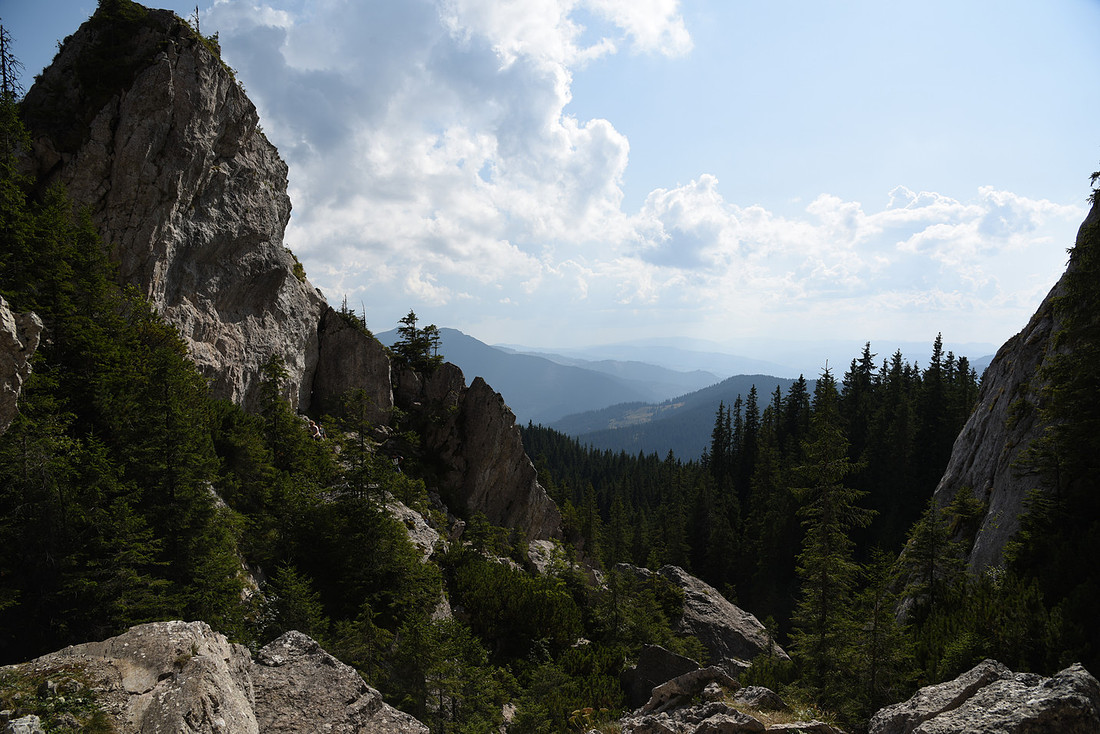
Climbing to the top of Rarău is not difficult and can be easily a day trip. Ropes and other safety equipment are not required in order to enjoy a walking tour around the top to view the valley and the limestone peaks. A good pair of hiking boots, a bottle of water, a camera and strong legs and arms are needed to carefully reach the best viewing areas. The views are stunning. In this photo that I took with my son after a morning hike up from the Hotel Alpin Rarău, the entire valley opens like pages in a fairy tale. The morning mist gently blankets the valley as sunbeams radiate through to warm the cool mountain air.
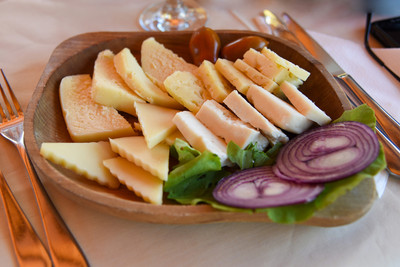
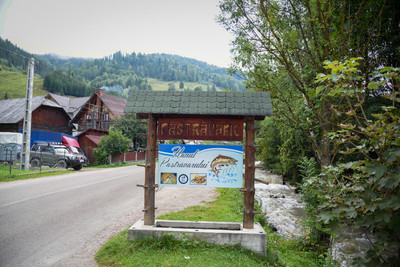
After a day's hike around the peaks, stopping at a local restaurant named Hanul Pastravarului for a small appetizer of fresh cheeses and Grasă de Cotnari wine, finished with a trout dinner, polenta, and conversations mixed in English and Romanian concluded a refreshing day away.
Creative Portraits
Creating art from a photograph sometimes takes a stretch of the imagination and a little preparation. First, know where you want to go. Imagine if the world were art and everything you see, hear, smell, or touch is an inspiring creation. You are free to walk anywhere in the world and enjoy the art gallery all around you. A flowering tree in the early spring, a creek bubbling in the woods with tiny fish or a turtle, grapes growing on a vine, or a pine tree decorated with Christmas ornaments from around the world. Earth surrounds us with gems, and out from the treasures of grand charcoal sketches appears a masterpiece of framed artwork.

Holiday Relief
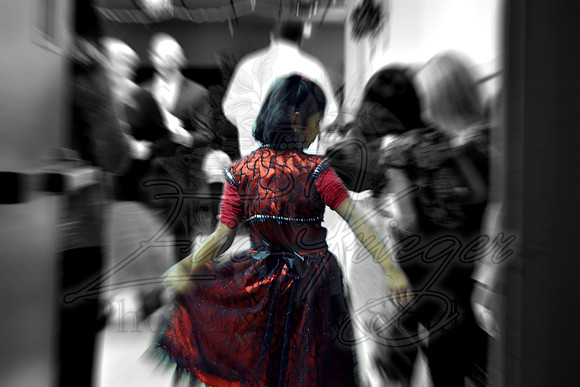
In December, the local Montessori school hosts a party where children sing holiday songs by age group that celebrate the season and showcase their talents. Preparations the night of the event are exciting and can be challenging for the teachers. One girl managed to isolate herself from the excitement as she closed her eyes and slowly twirled her dress while waiting at the head of the line. Other children talked loudly as they waited along the wall and watched the adults hurrying to complete the groups before entering the stage. I took this picture when one of the teachers walked through the door and all the sounds of adult leadership amidst children's harmony escaped.
The Boy of Las Pampas
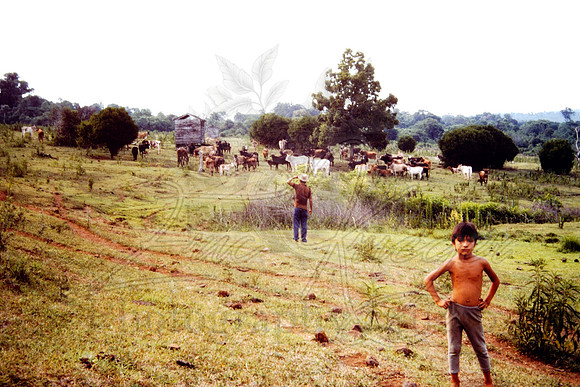
Misiones in northeast Argentina is bordered by Paraguay and Brazil. As a child, I traveled to Misiones visiting family over the Christmas holidays. We always picked a day to drive through the countryside and picnic or swim in one of many crystalline streams. This original print photo from 1985 shows a neighbor counting his cattle. His son watched me and my camera with great interest as we passed through their gate stopping to chat for awhile before driving on for miles over the Pampas.
Uhrturm
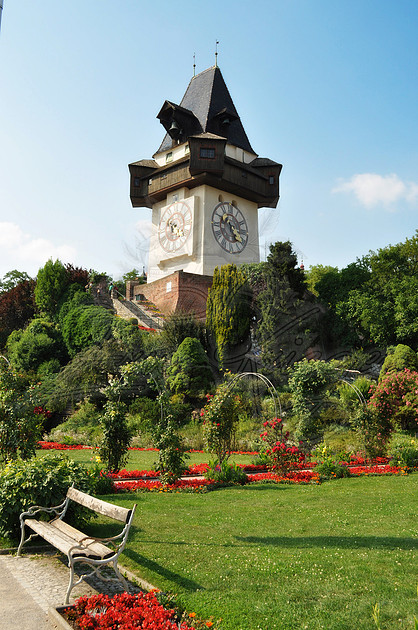
The icon of Graz on castle hill, this clock tower, or the Uhrturm was spared from destruction by the Napoleonic forces in 1809 after the people of Graz paid a ransom for its preservation. Note that the clock's hands have opposite roles, where the larger one marks the hour while the smaller marks the minutes. All around the tower are beautiful gardens and spectacular views of the old city.